Securing a professional pest control service in Knoxville provides direct mitigation against destructive wood-boring insects, seasonal overwintering pests, and domestic disease vectors. Local ridge-and-valley geology creates dense pockets of crawlspace humidity and subterranean pest pressure that bypass ordinary consumer treatments.
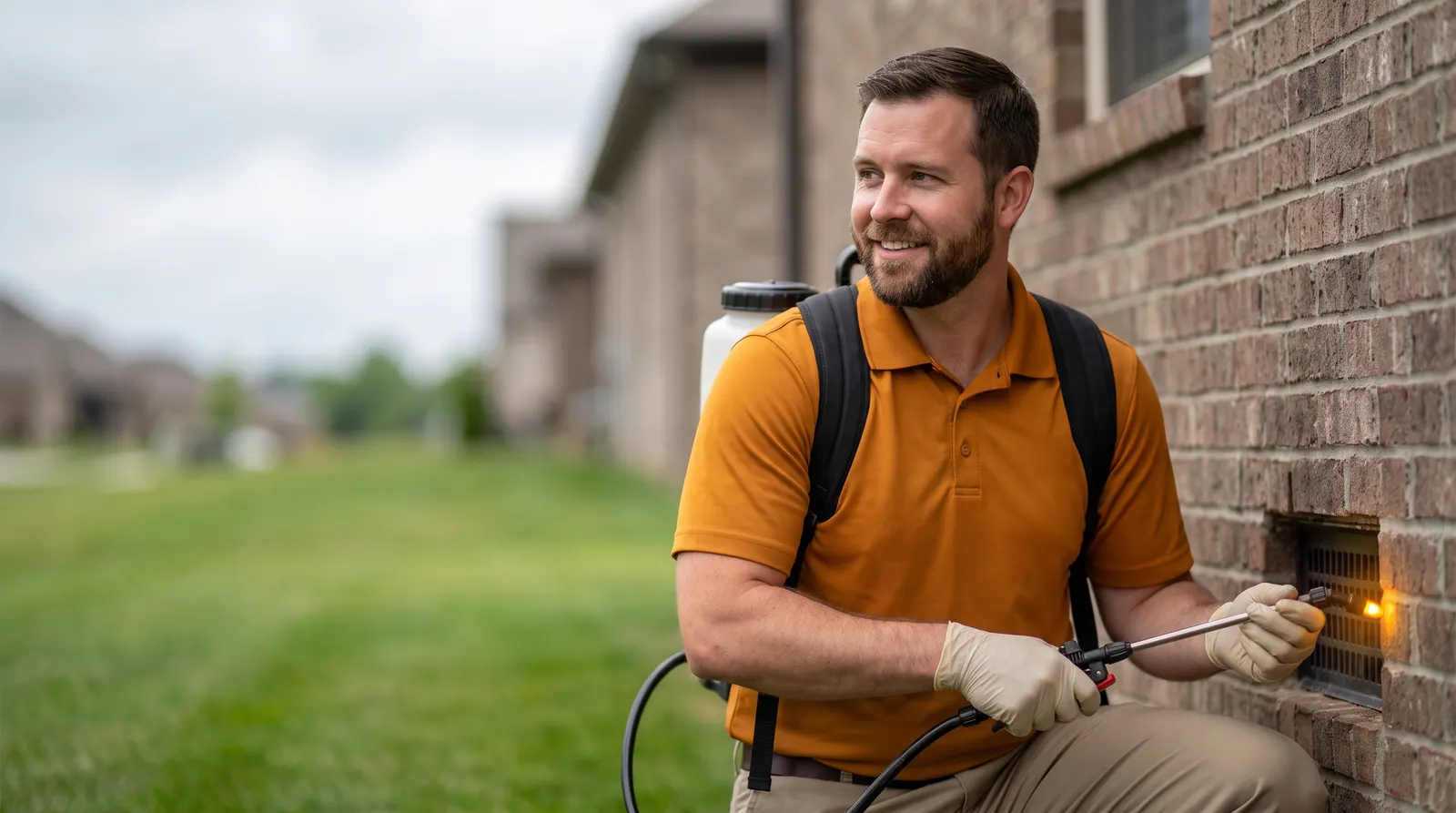
Pest control service in Knoxville is a professional structural treatment and monitoring system designed to eliminate active insect or rodent infestations and establish defensive perimeter barriers across East Tennessee residential and commercial properties.
Every service reflects the same meticulous attention to detail, whether it's a single job or a larger pest control sevice project across Knoxville.
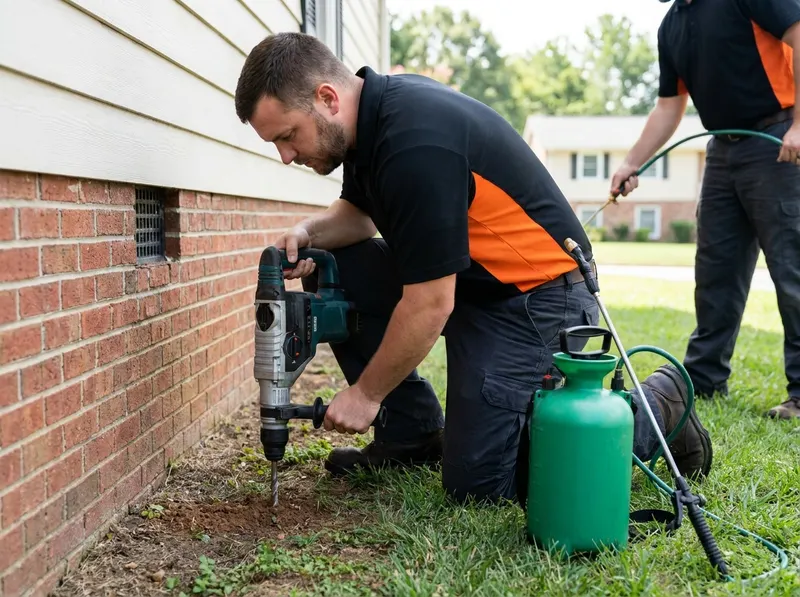
Subterranean termites (Reticulitermes flavipes) cause billions in annual US structural damage by feeding continuously on framing lumber. Technicians install liquid non-repellent termiticide barriers around foundation footings following standards outlined by the Tennessee Department of Agriculture Regulatory Services . Technicians apply non-detectable chemistry into trench lines along foundation perimeters and treat expansion joints, crawlspace piers, and plumbing penetrations to intercept subterranean foraging tubes. Specialized diagnostic tools, including structural acoustic sensors and moisture meters calibrated to detect wood dampness above 20%, pinpoint active galleries behind drywall without unnecessary demolition. Long-term monitoring networks provide continuous perimeter surveillance against undetected colony re-entry.
Get a quote →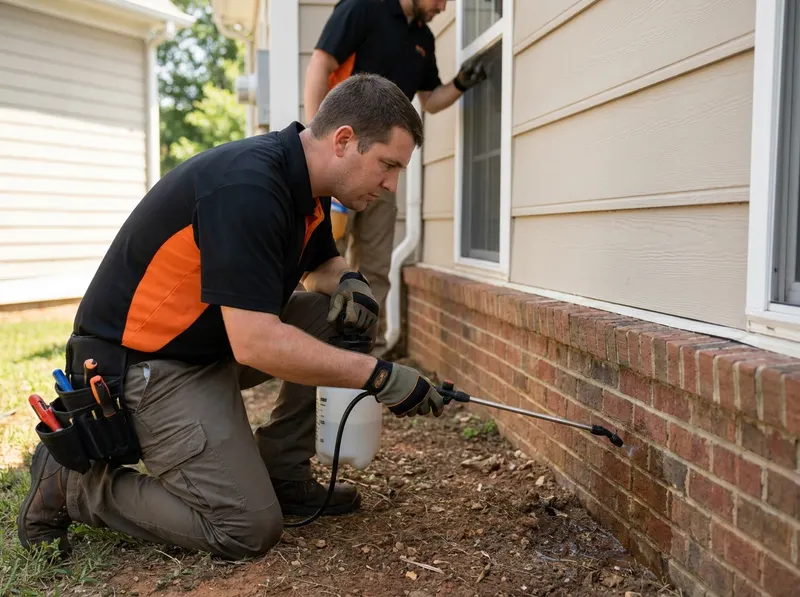
Boxelder bugs, smokybrown roaches, and multi-colored Asian lady beetles converge on exterior masonry and siding seeking winter shelter as autumn temperatures drop. Targeted barrier applications of synthetic pyrethroids or micro-encapsulated formulations seal exterior fenestrations, soffits, and weep holes to neutralize congregating insects. Technicians treat exterior resting walls and window frames in late August through October before insects move behind structural cladding, following guidelines from the Pest Control Technology Magazine technical library . Interior treatments isolate kitchen and utility plumbing runs with precision bait placements and insect growth regulators to interrupt reproductive cycles without airborne dispersal.
Get a quote →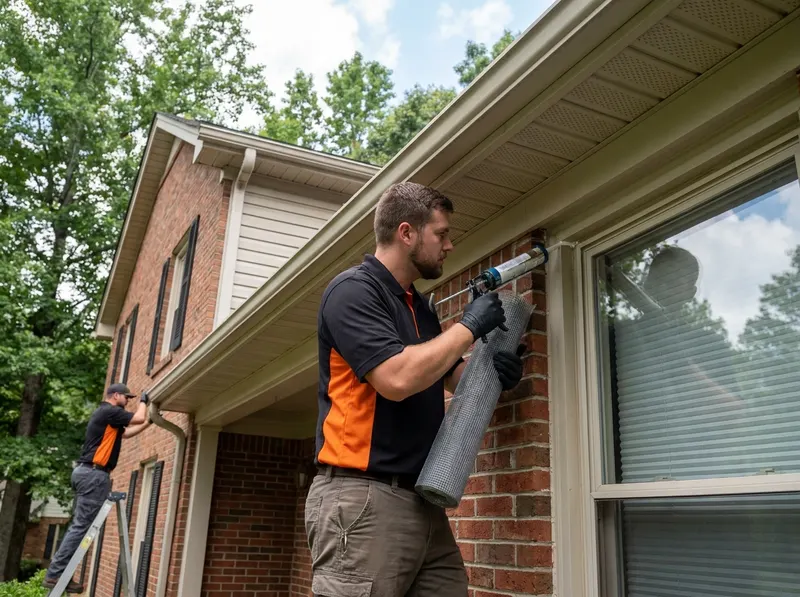
Brown marmorated stink bugs (Halyomorpha halys) release strong aggregation pheromones that draw hundreds of insects into structural attic spaces and wall cavities. Technicians apply targeted residual applications to structural rooflines, fascia boards, and window perimeters, neutralizing pests before they penetrate the thermal envelope. Physical entry mitigation includes sealing gaps larger than 1/8 inch along siding transitions, utility conduit entrances, and attic gable vents with copper mesh and silicone sealants according to recommendations from the Northeastern Integrated Pest Management Center . Properties treated before the initial fall temperature drops avoid winter emergence into living rooms and bedrooms.
Get a quote →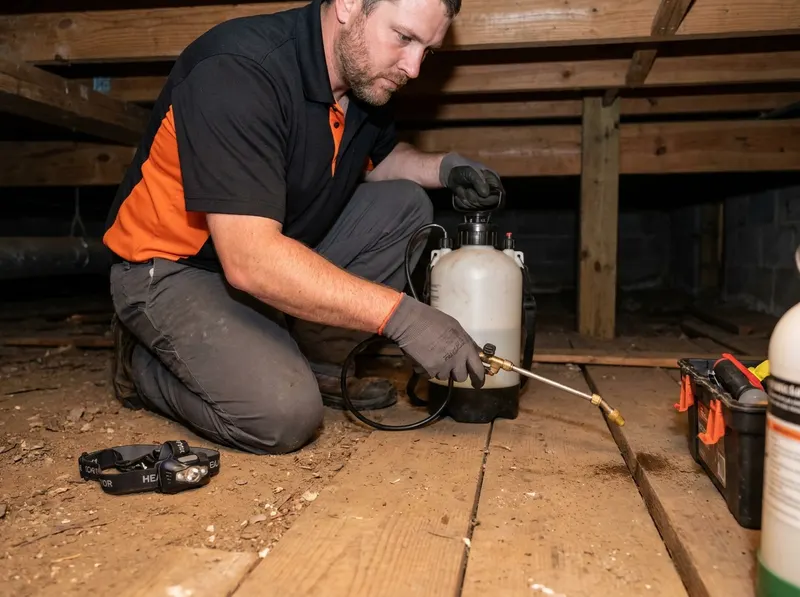
High crawlspace humidity levels throughout East Tennessee foster destructive populations of wood-destroying beetles, camel crickets, silverfish, and earwigs. Treatments include applying desiccating borate dust formulations into subfloor joist systems and treating foundation perimeters under heavy vapor barriers. Environmental modifications align with University of Tennessee Agricultural Extension structural pest resources to lower subfloor ambient moisture below insect survival thresholds. Targeted perimeter applications eliminate food sources for predatory arachnids like wolf spiders and brown recluses while drying out hidden breeding zones.
Get a quote →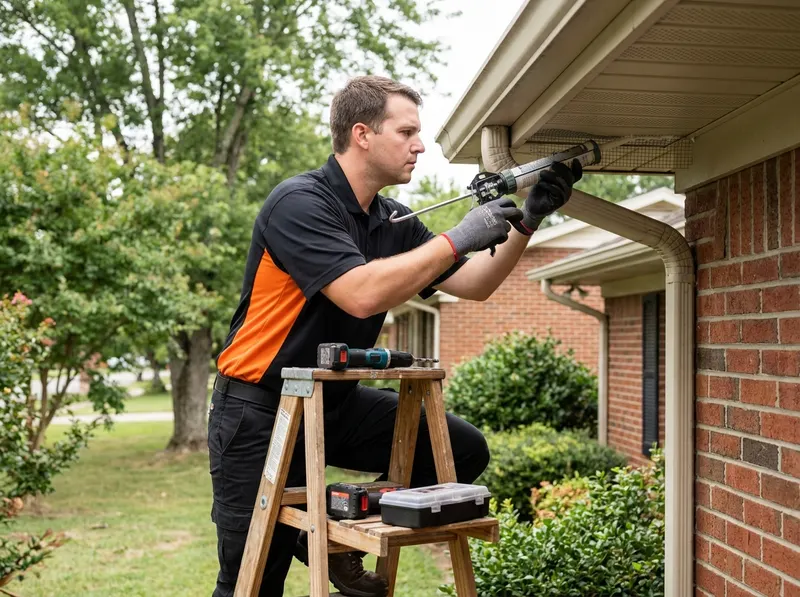
Roof rats (Rattus rattus) and Norway rats (Rattus norvegicus) exploit foundation vents, roof valleys, and HVAC line chases to access residential attics and subfloors. Exclusion programs seal all structural openings exceeding 1/4 inch with galvanized wire mesh, steel wool, and commercial-grade hydraulic expanding sealants to prevent gnawing damage. Mechanical snap-trapping runs inside attic spaces and crawlways remove resident populations without toxic indoor rodenticides, preventing carcass decay odors behind walls. Tamper-resistant, anchored exterior bait stations are positioned along foundation boundaries compliant with United States Environmental Protection Agency pesticide safety programs .
Get a quote →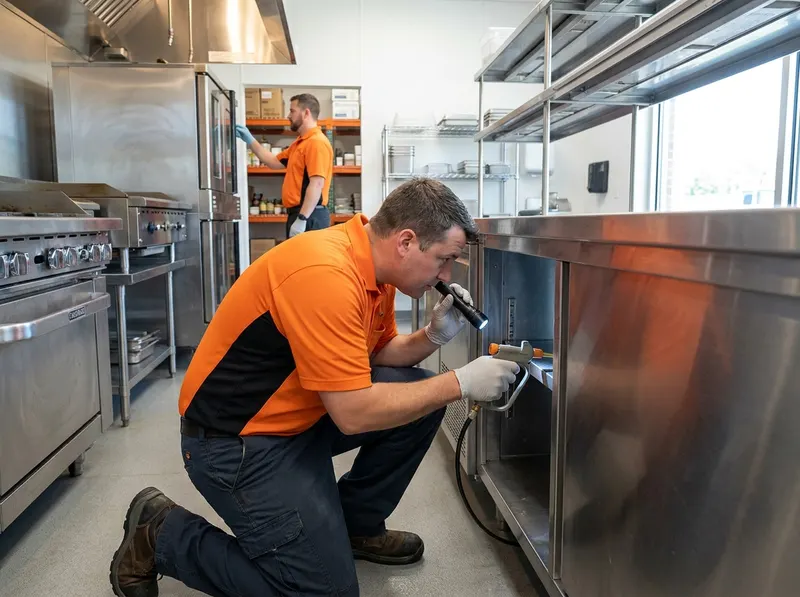
Commercial foodservice, hospitality, and warehouse facilities face zero-tolerance regulatory standards regarding pest contamination. Technicians deploy targeted bait formulations, non-toxic monitoring traps, and insect growth regulators to eradicate German cockroaches (Blattella germanica) and stored product pests. Auditable reporting logs, barcode tracking points, and structural sanitation assessments fulfill critical control point standards established by the U.S. Food and Drug Administration food code compliance . Barrier defenses and non-chemical exclusion protocols operate around sensitive inventory without contaminating packaging, food prep surfaces, or mechanical equipment.
Get a quote →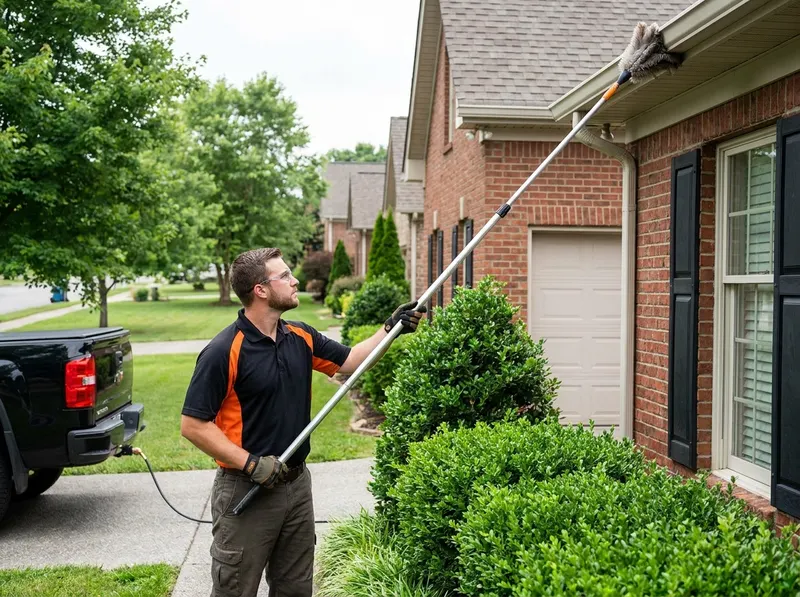
Paper wasps, bald-faced hornets, and subterranean yellowjacket colonies build defensive nests under architectural eaves, decks, and within landscaping voids, creating severe sting risks. Technicians use precision non-volatile contact applications and aerosol injection tools to dismantle overhead paper nests and subterranean nests safely without dispersing defensive swarms. Eaves, decorative columns, and window trims are treated with residual repellent chemistry to prevent future queen re-nesting over the active summer season, conforming to safety parameters governed by the Occupational Safety and Health Administration jobsite standards .
Get a quote →Seasonal exterior barrier protocols protect residential perimeters against ants, earwigs, centipedes, and ground beetles migrating from landscaped zones. Technicians apply a 3-foot vertical wall application and a 6-foot horizontal soil band outward from the foundation using balanced residual liquid solutions. Granular moisture-resistant formulations are dispersed into mulch beds and ground covers to collapse insect nesting zones before pests breach entry thresholds. These perimeter defense bands remain active through heavy seasonal rainfall, adhering to national environmental standards outlined by the National Pest Management Association best practices .
Get a quote →You get a firm, itemized quote for your pest control sevice before any work begins, no surprises, no pressure.
Careful prep, tidy work, and a full cleanup when we are done. We treat your home and belongings like our own.
The same trusted, background-checked team from the first call to the final check.
Property owners facing structural pest pressure must calibrate treatment protocols to the specific biology of the target pest and property layout. If your objective is halting structural foundation damage from subterranean colonies, choose localized non-repellent liquid termiticide barriers or monitoring stations; if your concern is indoor insect sightings such as German cockroaches or pantry pests, choose targeted precision baiting combined with insect growth regulators. The trade-off is mechanical disruption: soil barrier treatments demand exterior trenching around foundation stems, whereas interior baiting requires meticulous sanitation and unwashed bait zones for 14 to 21 days.
If you are managing seasonal roof rat or mouse invasions in vented crawlspaces, select multi-point structural exclusion involving 1/4-inch galvanized hardware cloth over basic broadcast baiting; structural exclusion costs more initially in labor, but broadcast rodenticides alone require continuous bait replenishment and carry the trade-off of secondary rodent decay odors inside interior drywall cavities.
Every project gets a firm, written price after a free on-site visit. Ranges below for orientation.
Tell us about your pest control sevice job and we'll send a clear, written quote, usually the same day. Or just call and talk to a real Knoxville pro.
(865) 460-6433
Knoxville's humid subtropical climate and dense network of karst limestone sinkholes, along with proximity to the Tennessee River and dense woodlands surrounding Ijams Nature Center, foster aggressive subterranean termite activity and chronic seasonal rodent pressures. Historic properties in neighborhoods like Fourth and Gill, Old North Knoxville, and Sequoyah Hills often feature porous brick foundations, unconditioned stone basements, and elevated crawlspace humidity exceeding 70%, creating prime habitats for wood-boring pests and overwintering insects.
Free estimates for Knoxville & the surrounding area.
 AmberTrail Extermination